
Searching Kaufman County Civil Dockets
Use the official Kaufman County court directory to reach Court Search. Start with the exact cause number or party spelling, then confirm the court and case type. A similar name is not enough. When the Tyler portal is unavailable or incomplete, contact the clerk for the court printed on the petition, citation, notice, or order.
The District Clerk keeps district civil and family files. The County Clerk handles assigned county and county-court-at-law records. Each justice court keeps its own small-claims, eviction, debt-claim, and other civil docket. Phone confirmation, an in-person counter, mail, and any public terminal remain useful access routes.
- Identify the court shown on the source paper.
- Search the exact cause number, then an exact party name if needed.
- Match the court, style, and civil category.
- Separate event entries from document images.
- Request the precise pleading, order, or certified judgment from its clerk.
Three Kaufman Civil Docket Tiers
Kaufman County civil jurisdiction is divided. District courts handle district suits and family work. County Court at Law identifies civil lawsuits and justice-court appeals among its duties. Justice courts hear small claims, evictions, and other civil matters within their published $20,000 limit.
| Tier | Typical work | Custodian |
|---|---|---|
| District | District civil and family | District Clerk |
| County law | Civil suits and JP appeals | County Clerk |
| Justice | Small claims and evictions | Precinct clerk |
The assigned court controls. A requester cannot choose a more convenient precinct, and a county-wide name search does not replace the jurisdiction check.
Inside a Kaufman Civil Docket
A civil docket is a chronological event index. It can show an original petition, citation and service, answer, counterclaim, motion, notice, hearing, order, judgment, dismissal, or appeal entry. Filed and signed dates can differ. The docket may show that an order exists without displaying its text.
| Cause number | The exact identifier, preserved as printed, such as COURT-YEAR-SEQUENCE. |
|---|---|
| Style | The court caption naming the parties. |
| Filings | Petition, service, answer, counterclaim, motion, notice, or exhibit event. |
| Settings | Conference, motion hearing, bench setting, jury setting, or trial. |
| Outcome | Signed order, judgment, nonsuit, dismissal, or appeal notice. |
Kaufman Motion Hearing Sequence
The 86th District Court rules describe a local motion process. A party secures a date, files a separate hearing notice, and includes a conference certificate where required. Published language calls for a proposed order within five business days after the hearing and separately addresses rejection after thirty days.
Each step can produce a distinct docket entry. A filed motion does not prove it was heard. A proposed order does not prove it was signed. Confirm the current procedure with the court coordinator and locate the signed order before treating a request as decided.
Kaufman 422nd Civil Orders
The official 422nd District Court page publishes standing-order and appointment-wheel material relevant to assigned cases.
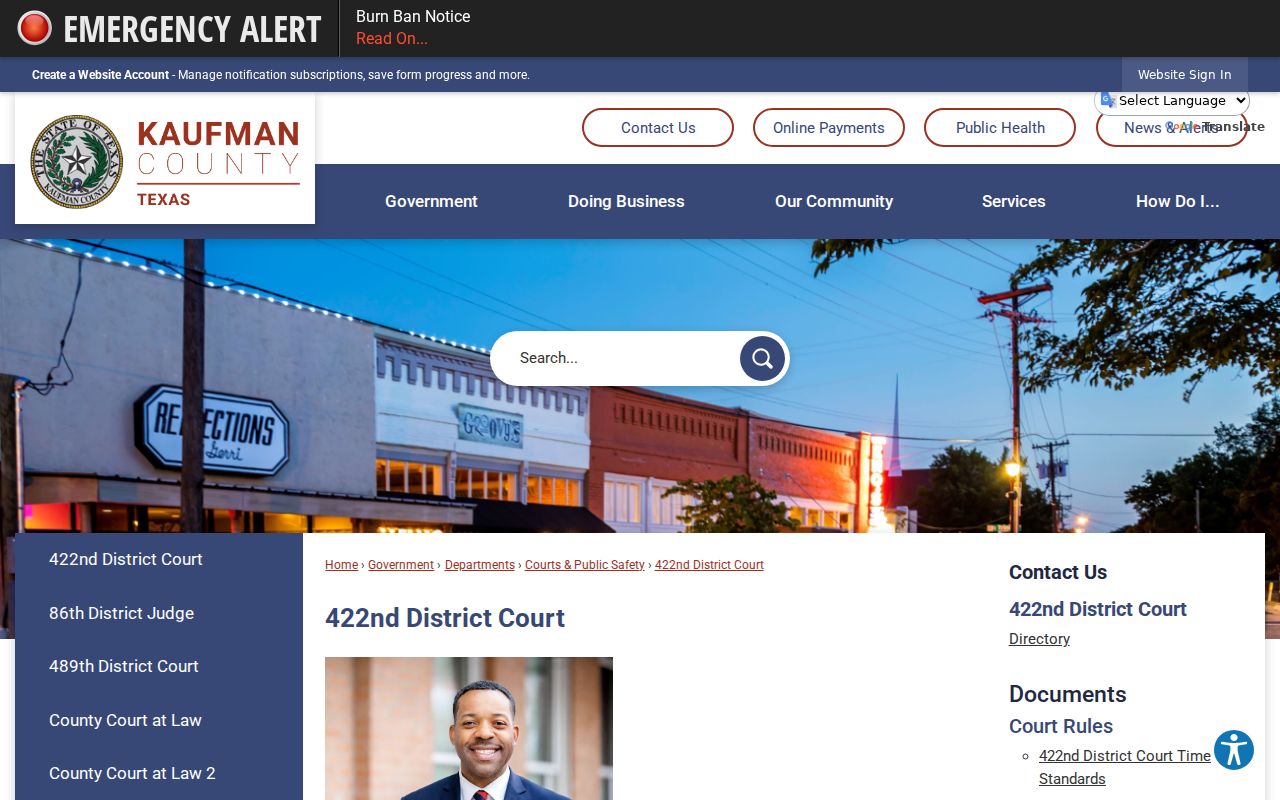
Check that court-specific material along with the case docket because a general county search cannot replace a standing order.
Civil Case Types on the Docket
Kaufman County civil dockets include district lawsuits, family matters, county-law civil suits, justice-court appeals, small claims, debt claims, and evictions. The category does not by itself identify the clerk, so retain the court name with every search note.
- Contract, debt, tort, and property disputes
- Family matters routed through district records
- County-court-at-law suits and JP appeals
- Justice-court small claims and debt claims
- Evictions filed in the proper precinct
JP3 publishes intake cutoffs for new in-person eviction and small-claim filings: 2:30 p.m. Monday through Thursday and 1:30 p.m. Friday. Those are filing windows, not hearing times.
Kaufman Civil Counts in Context
Fiscal year 2024 Office of Court Administration totals show activity at multiple levels. Kaufman district courts reported 1,122 civil cases at the start, 1,532 added, 1,259 disposed, and 1,256 active at year end. Justice courts reported 14,082 beginning, 4,443 added, 3,297 disposed, and 13,016 ending.
These are annual reporting categories. They do not prove that one case exists, is public, or remains pending.
Civil Docket Settings and Hearings
A civil setting can be a status conference, motion hearing, temporary-order hearing, bench trial, or jury trial. Read the court, date, time, setting type, and later reset together. A continuance moves a setting; it does not erase the suit or decide a motion.
Kaufman County Docket Calls covers selected county-law calendars, not every district or justice setting. Confirm the date with the assigned clerk or coordinator. The Kaufman County Court Dates resource explains why a posted list is only one calendar channel.
Kaufman Copies Beyond the Docket
A search event and the filed paper are different records. Ask for a petition when the claim text matters, a signed order when the ruling matters, an exhibit when supporting material matters, or a certified judgment when clerk authentication is needed. The JP2 request form models a precise request with cause number, style, detailed document list, delivery method, and contact information.
For County Clerk-maintained files, public inspection is stated as free except for mental-health and juvenile records. Plain copies cost $1 per page. Certified copies cost $5 for certification plus $1 per page, and a certification of facts or search without copies costs $5. Confirm other clerks' schedules before ordering.
Kaufman County Law Civil Route
The official County Court at Law page identifies its civil lawsuit and JP appeal responsibilities.
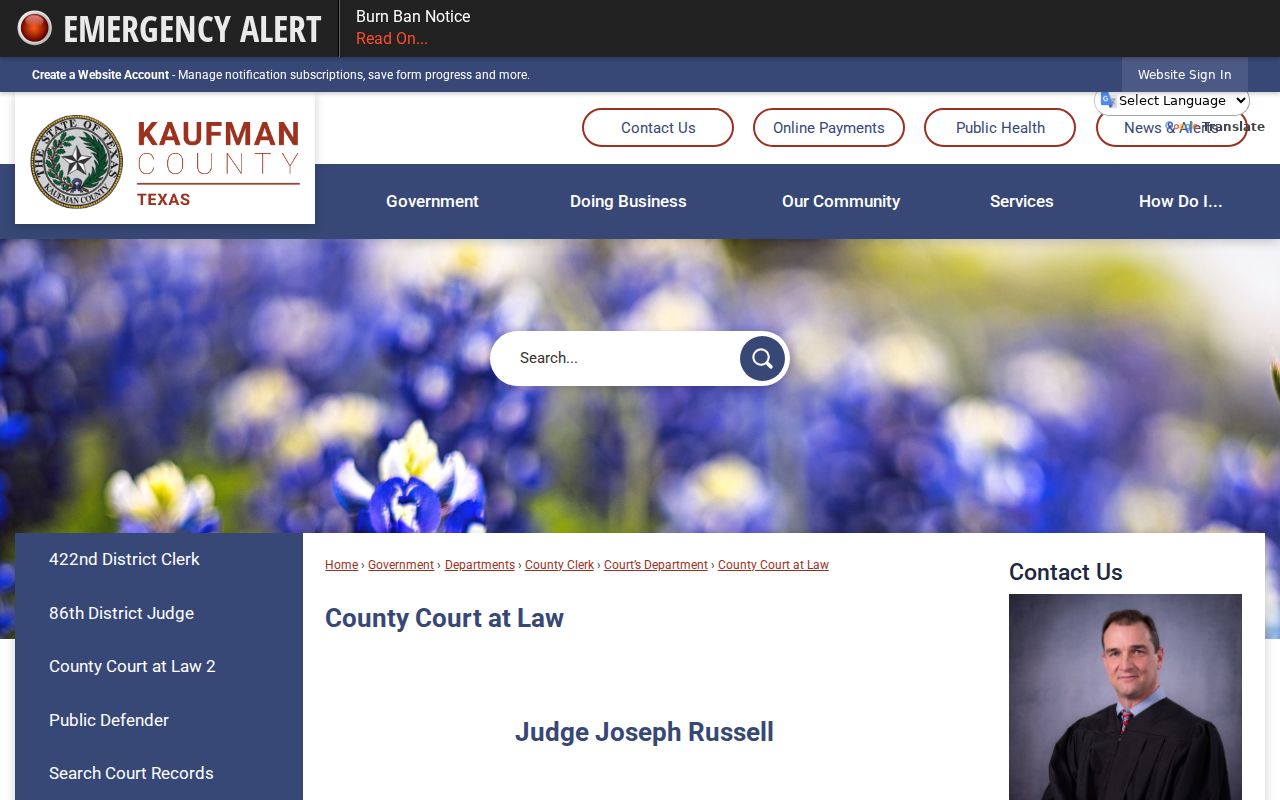
The page is a routing aid: the County Clerk holds assigned county-level records, while district civil and family files follow the District Clerk.
Civil Docket Access Rules
Public access is broad but not absolute. Sealed, juvenile, mental-health, and protected family material may be withheld, while personal identifiers may be redacted. Texas Rule of Judicial Administration 12 supplies a route for judicial records outside ordinary case-file access. The case clerk remains the first contact for pleadings and orders.
Request narrow records. Name the court, cause number, case style, exact document, date range, and delivery method. Ask whether a redacted copy can be released.
Access channels include county Court Search, registered re:SearchTX where integrated, the clerk by phone, the counter, mail, and any public terminal. eFileTexas is a filing route, not a promise of public document browsing. Appeals create separate clerk's and reporter's records for the Fifth Court of Appeals at Dallas.